Crown lifting in Greenwich for safer, brighter, better-shaped trees
Professional crown lifting for homes, businesses, and managed properties in Greenwich
If you are looking into crown lifting in Greenwich, you are probably trying to solve a practical problem. Maybe low branches are blocking the path, making parking awkward, brushing against a roof, or preventing light from reaching a garden, forecourt, shopfront, or upper-floor window. In a borough like Greenwich, where mature trees are part of the area’s character, the right tree care needs to be both effective and careful. Crown lifting is a common way to raise the canopy by removing selected lower branches, creating more clearance without removing the tree itself.
For local homeowners, landlords, estate managers, schools, and commercial premises, crown lifting can improve access and visibility while keeping trees healthy and attractive. It is often requested for front gardens, driveways, shared access ways, school grounds, car parks, and roadside trees. Done properly, it should complement the tree’s natural structure rather than making it look stripped or unbalanced. That is why choosing an experienced local team matters: the work needs to suit the tree species, its age, its condition, and the setting around it.
Greenwich has a wide mix of property types, from period terraces and converted buildings to modern developments, estates, business premises, and streets with established mature planting. That means tree work often needs more planning than people expect. Access may be tight, parking may be limited, and neighbouring properties can be close. A good crown lifting service will take all of that into account, work tidily, and leave the tree in a better, safer position for everyday use.

What crown lifting involves
Crown lifting is the process of removing the lowest branches from a tree’s crown to raise the height of the canopy. The aim is to create clearance beneath the tree while preserving the overall shape and health of the tree above. It is not the same as topping, and it should never be treated as a quick cut-and-fix job. The cuts need to be selected carefully so the tree can continue to thrive and respond well.
In practice, crown lifting may be used to create room for pedestrians, cyclists, vehicles, emergency access, maintenance work, or simply to let more daylight into a garden or building. The amount lifted depends on the tree’s form and the reason for the work. On some trees, only a small number of lower limbs are removed. On others, the lower canopy is lifted more significantly, but always within sensible arboricultural limits.
Not every tree is a good candidate for the same treatment. A mature plane on a street corner, a young ornamental tree in a courtyard, and a broad oak in a larger garden will each need a different approach. The best results come from a site visit, where the arborist can assess branch structure, growth habit, target areas, and any constraints such as buildings, fences, lighting, overhead features, or nesting activity.

Why people choose crown lifting in Greenwich
There are many reasons local customers ask for this service. One of the most common is access. Low branches can make it difficult to walk under a tree, push a pram, wheel a bin, or drive into a property safely. In Greenwich, where many homes and businesses sit close to pavements and boundary lines, even a modest amount of extra clearance can make a noticeable difference.
Another frequent reason is light. Shaded gardens can feel damp and enclosed, and lower branches may block natural daylight from reaching windows or outdoor seating areas. Crown lifting can help open up a space without taking away the tree completely. For commercial customers, this can be especially useful around entrances, customer parking bays, loading areas, and outdoor seating spaces where a lighter, more open feel is desirable.
There are also visual and practical reasons. Trees that are lifted properly often look cleaner and more balanced, with a clear stem and a well-defined canopy above. In residential streets, this can make front elevations look more orderly. In managed landscapes, it can help keep sightlines open and support a more professional appearance. When the work is planned correctly, the tree still looks like a tree—just one that fits its setting better.
Signs your tree may need crown lifting
It is not always obvious at first glance that a tree would benefit from crown lifting. Some customers only notice the issue when they start having daily inconvenience around the tree. If you are unsure, the following signs are worth considering:
- Branches are hanging too low over a pathway, driveway, or garden route
- Vehicles are brushing lower limbs when entering or leaving the property
- Lower growth is blocking light into a home, office, or shopfront
- People have to duck or step around the canopy to pass underneath
- Prams, wheelchairs, or mobility aids cannot pass comfortably
- Low branches are interfering with maintenance, cleaning, or outdoor use
- The tree looks heavy at the bottom and could benefit from a more open crown
If you are seeing one or more of these issues, a local arborist can advise whether crown lifting is the right solution or whether another form of tree pruning would be more suitable. In some cases, selective reduction or thinning may be a better option. In others, a combined approach gives the best result.
It is also important to think about the future. A tree that looks fine this year may start causing access problems within a season or two if it is growing quickly. Regular inspections and sensible maintenance can help keep the canopy at the right height before small issues become more disruptive. That is particularly useful on streets with repeated use, around communal courtyards, and in properties where several people rely on clear access every day.
How crown lifting works on site
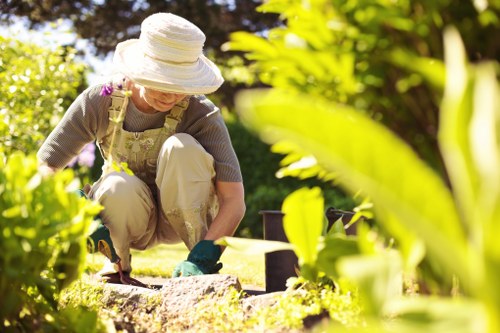
A proper service begins with an assessment of the tree, the surrounding space, and any restrictions that may affect the work. The arborist will look at the species, health, branch structure, nearby targets, and the level of clearance needed. They may also consider whether the tree has previously been pruned, whether the work is for access or light, and whether the crown should be lifted evenly across all sides or more heavily in one direction.
Once the approach is agreed, the team will usually set up safely, protect nearby surfaces where needed, and carry out the pruning using appropriate climbing, rigging, or platform methods depending on the site. The cuts are made selectively to remove the lower branches without leaving the tree overexposed or unstable. Good pruning practice is about restraint as much as removal.
After the work is completed, the site should be cleared of branches and debris, and the tree should be left tidy. Customers often appreciate that the improvement is immediate: more headroom, more light, less obstruction, and a better relationship between the tree and the property. If you manage a commercial or communal site, that can also mean fewer complaints, better circulation, and a more welcoming environment.
What a careful lift should achieve
- Improved clearance for people, vehicles, and maintenance access
- Better daylight penetration to gardens and buildings
- A tidier appearance without over-pruning
- Reduced interference with paths, entrances, and boundaries
- Ongoing tree health supported by correct pruning technique
Why Greenwich properties often need a local approach
Greenwich is a varied area, and tree work here is rarely one-size-fits-all. Some properties have compact front gardens and narrow side access. Others are on busier roads where safe traffic management and tidy working practices matter. Some sites are part of managed estates or commercial premises, where timing and access arrangements need to be planned around residents, staff, or visitors. A local team understands these realities and can adapt the work accordingly.
Older homes, terraces, and period conversions can have limited access to rear gardens or enclosed outdoor spaces. In those situations, removing arisings through the property may need to be handled carefully, and equipment may have to be brought in with minimal disruption. On newer developments, shared landscaped areas may require coordination with other occupiers or site managers. A local company that regularly works in Greenwich is more likely to be prepared for these details.
There is also the question of tree character. In a place with as much established greenery as Greenwich, customers often want to protect the look and feel of mature trees while solving practical problems. That means the work should be respectful and proportionate. Crown lifting in Greenwich should never feel heavy-handed. It should look like a considered improvement, not a rushed cut.
What is included in a crown lifting service
While every job is different, most customers want to know what they can expect when they arrange the work. A typical service may include:
- Initial discussion of the issue and desired clearance
- Site assessment of the tree and surrounding area
- Advice on whether crown lifting is suitable
- Selective removal of lower branches to the agreed height
- Attention to the tree’s natural balance and shape
- Removal of cuttings and basic site clearance
- Recommendations for any follow-up maintenance
Some trees need a light lift only, especially where the goal is to improve foot access or keep a small garden feeling open. Others may require a more substantial lift to clear vehicle movement, public walkways, or a commercial forecourt. The right level of work depends on the tree and the site, not on a standard formula.
Good tree care is always site-specific. That is why a visit or detailed discussion is so useful before the job goes ahead. If a customer wants light, access, safety, and a neat result, the scope should be set out clearly before pruning begins.
Extra considerations for different property types
Residential, commercial, and communal properties may all need crown lifting, but the priorities can differ:
- Homes: better light, easier garden use, improved driveway access, tidier front elevations
- Shops and offices: clearer signage, safer access, more inviting entrances, less obstruction to customers or staff
- Schools and community sites: safer circulation, better visibility, improved access for maintenance and play areas
- Managed estates: consistent appearance, reduced complaints, clearer routes around shared spaces